
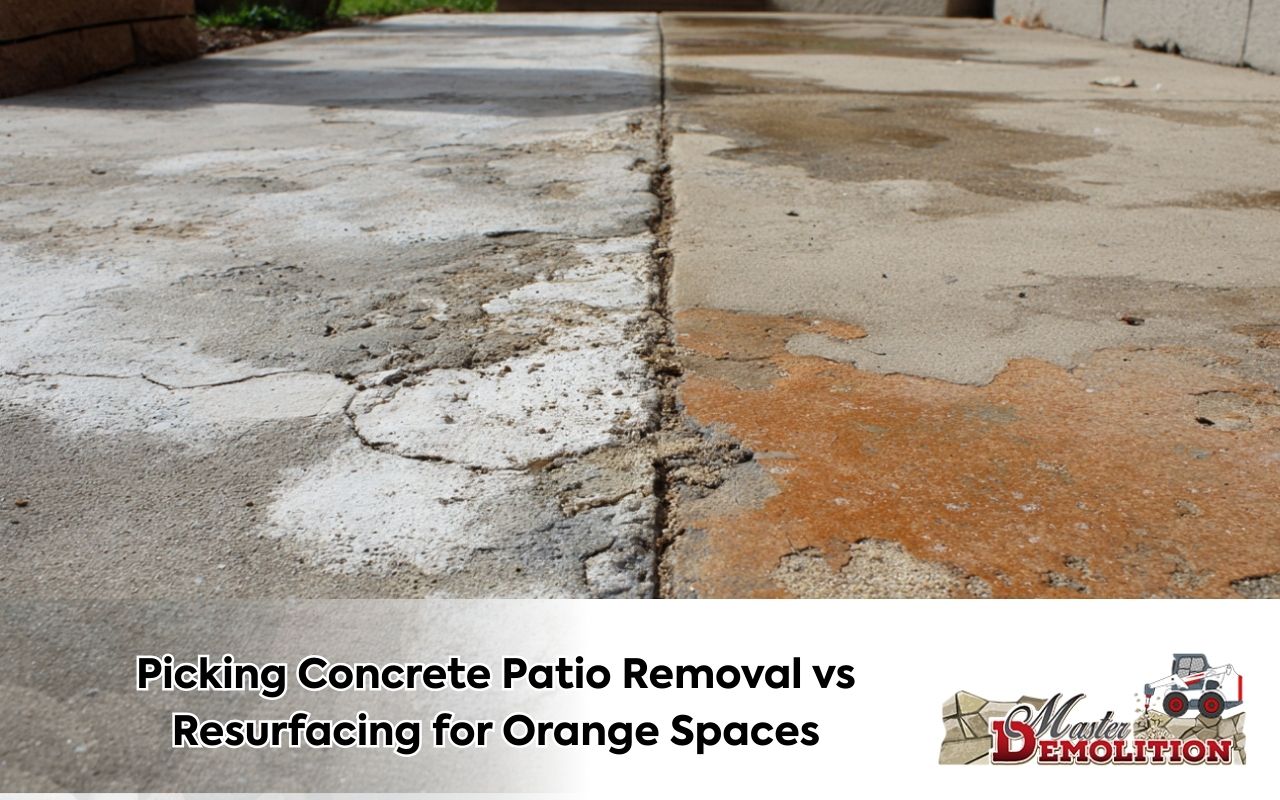
Picking Concrete Patio Removal vs Resurfacing for Orange Spaces
Choosing the right option for your outdoor space can feel like a tricky puzzle. However, if your patio has cracks or uneven thickness, deciding on concrete patio removal vs resurfacing for Orange can change both look and use. Still, what truly shapes the decision? The condition of the subgrade and key cost drivers often matter most.
In this guide, you will learn what to check and what each option can deliver. As a result, you can choose a fix that fits your home and daily life. Whether you want a full redo or a simple refresh, you will see what each path involves. For Orange homeowners, that clarity helps your patio last longer and look better.
Assessing the Current State of Your Concrete Patio
First, evaluate your patio with a slow walk and a close look. Notice cracking patterns that may point to deeper issues. While tiny hairline cracks can be cosmetic, wider gaps often signal movement below. Also, watch for uneven thickness, because thin spots break more easily under foot traffic and furniture.
Next, check the subgrade signs. If the soil or base shifts, the slab can shift as well. Therefore, look for low areas, soft-feeling spots, or water that sits after rain. Finally, review overall wear, such as flaking or surface peeling. Consequently, you can set clear expectations for work, downtime, and upkeep.
Signs That Point Toward Full Removal
In many cases, removal makes sense when the slab has deep cracking, large height changes, or sections that move. Additionally, uneven thickness across the patio can lead to repeat breaks. If water keeps pooling, that may also hint at a base problem that resurfacing cannot solve.
Wide or spreading cracking that returns after patching
Uneven thickness that creates weak spots
Soft edges or sinking areas that suggest subgrade movement
Standing water that points to slope or drainage trouble
If you are unsure, a contractor can verify the slab and the soil support. For example, Master Demolition can help you plan concrete patio removal vs resurfacing for Orange based on on-site conditions.
Concrete Patio Removal: Benefits and Tradeoffs
Removal gives you a clean start. As a result, you can fix poor subgrade support, correct slope, and rebuild with the right thickness. This approach works best when damage is widespread and repairs keep failing. Moreover, you can add better drainage and reinforcement during the rebuild.
However, removal can be noisy and disruptive. It also involves debris hauling and proper disposal. Even without listing numbers, common cost drivers include labor, equipment use, and haul-away needs. Still, a new slab often brings stronger results and fewer future fixes.
Resets the patio from the ground up
Lets you correct subgrade issues for stability
Supports a new thickness plan for long-term strength
Concrete Patio Resurfacing: When It Works Best
Resurfacing adds a new top layer over the existing slab. Therefore, it can improve stains, worn texture, and small cracking. Since it avoids demolition, it is often faster and less disruptive. Also, it can refresh the look without changing the whole structure.
Yet resurfacing cannot solve major base failures. If the slab shifts, new cracks can show up again. Consequently, surface prep matters a lot, including cleaning and patching. In addition, overlay thickness should match expected use and local weather so it holds up well.
Improves appearance with a new finish layer
Can reduce downtime compared to removal
Depends on a stable slab and solid subgrade
Cost Drivers to Compare for Both Options
When choosing concrete patio removal vs resurfacing for Orange, you should compare the cost drivers that shape scope. For removal, key drivers include concrete break-up work, equipment access, hauling, and disposal. If the base needs repair, subgrade cleanup and compacting can add more steps.
For resurfacing, cost drivers often relate to overlay type, prep effort, and finish complexity. Decorative patterns can raise the workload, even when the slab stays in place. Also, tight access or sloped yards can increase effort for either path. Therefore, a site check is the best way to avoid surprises.
How Subgrade Conditions Shape the Best Choice
The subgrade is the support under your patio. If it shifts or washes out, the slab can sink and crack again. Therefore, resurfacing may only hide the problem for a short time. With removal, the base can be rebuilt and packed evenly for better support.
On the other hand, if the subgrade is firm and drains well, resurfacing becomes more appealing. As a result, you can focus on improving the surface instead of rebuilding the foundation. If you see soft spots or standing water, ask a pro to confirm what is happening below.
Longevity and Durability: What to Expect
A new slab after removal often lasts longer when poured and cured correctly. Additionally, a well-planned thickness and solid base can reduce future cracking. Over time, that can mean fewer repairs and steadier performance.
Resurfacing can also last for years when the slab below is stable. However, if moisture or movement returns, the top layer may crack again. Therefore, durability depends on surface prep, overlay quality, and the condition of the slab beneath.
Environmental Considerations for Orange Homeowners
Resurfacing can reduce waste because it reuses the existing slab. As a result, fewer truck trips and less new material may be needed. If lower waste matters to you, ask about mixes that reduce the overall footprint.
Removal creates more debris, although many sites crush old concrete for reuse. Still, a rebuild can allow better drainage plans. For example, you can improve slope and water flow to reduce runoff. Therefore, the greener choice depends on what the patio needs to stay stable.
Design Choices That Can Improve Your Patio
Both options can improve curb appeal. With removal, you can redesign the whole layout and adjust thickness for steps, edges, or built-in features. With resurfacing, you can add color, patterns, or textures that mimic stone. Additionally, texture can improve slip resistance around seating areas.
Color and pattern updates for a refreshed look
Texture choices for better grip and comfort
Edge details that frame the space cleanly
If you want to see finished work ideas, browse the Master Demolition project portfolio for examples that match your style.
Maintenance After Removal or Resurfacing
New slabs usually need basic care, such as sweeping and periodic washing. Also, sealing can help protect against stains and sun exposure. If small cracks appear, quick patching helps prevent bigger problems.
Resurfaced patios need similar care, although checking the top layer matters more. Thin layers can chip if heavy objects strike the surface. Therefore, fix minor damage early to keep water out. No matter the choice, good drainage protects the slab and the subgrade.
Frequently Asked Questions
How do I know if resurfacing will hold up?
If the slab is stable and the subgrade is firm, resurfacing can last well. However, shifting or soft spots can cause new cracking.
Does uneven thickness always mean removal?
Not always. Still, uneven thickness can create weak areas. Therefore, a site review helps confirm the risk.
What kind of cracking is most concerning?
Wide cracks, growing cracks, and cracks with height changes are more serious. Additionally, repeat cracks often signal movement below.
Why does the subgrade matter so much?
The subgrade supports the slab. If it settles or washes out, the patio can sink. As a result, surface fixes may fail sooner.
Who should I call to evaluate my patio in Orange?
Start with a concrete demolition specialist who can assess stability and access. You can also review services on the Master Demolition concrete demolition page, then reach out through the Master Demolition contact page.
Making the Best Choice for Your Orange Patio
Choosing concrete patio removal vs resurfacing for Orange comes down to the slab’s condition and what you want long term. If you have major cracking, shifting, or uneven thickness, removal may bring the best reset. When the slab is sound, resurfacing can be a smart refresh.
Either way, focus on the subgrade and the real cost drivers that shape the job. Consequently, you can pick a solution that looks better, feels safer, and lasts longer for your outdoor life in Orange.