
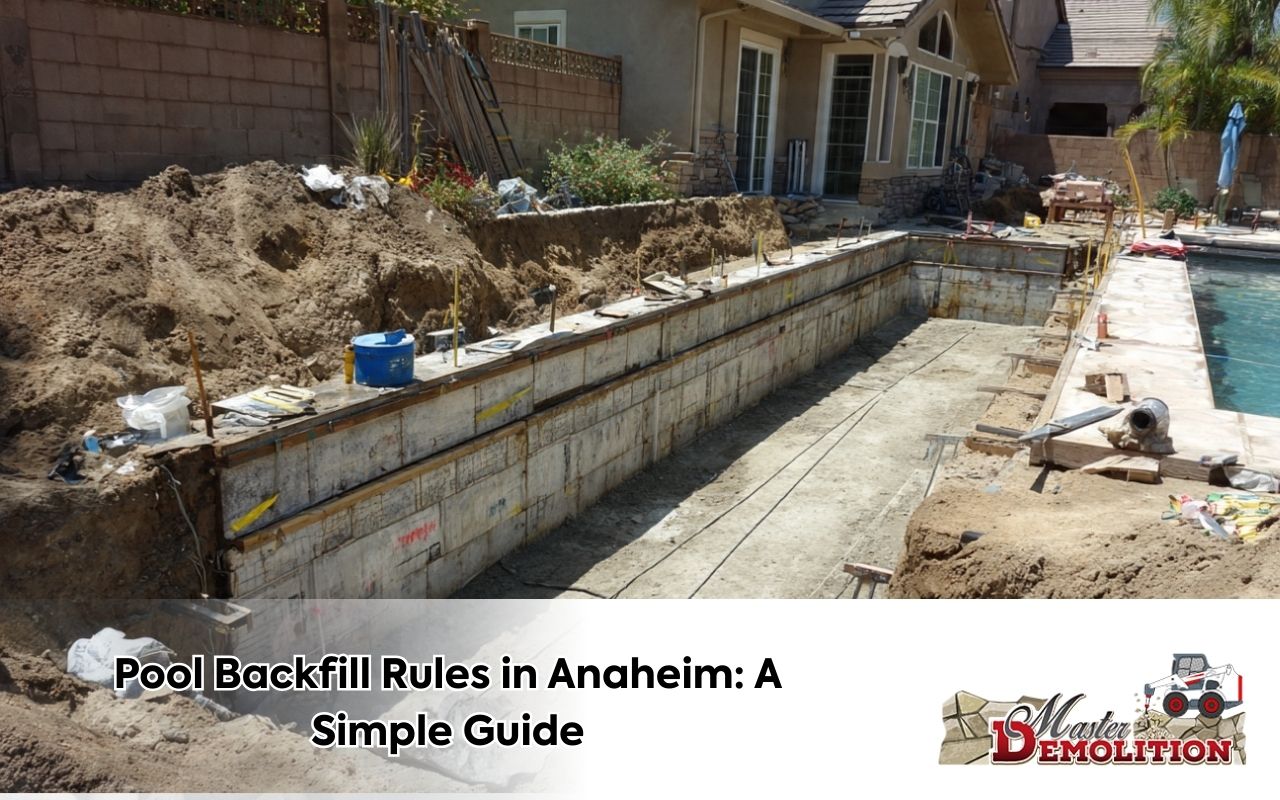
Pool Backfill Rules in Anaheim: A Simple Guide
Pool backfill standards in Anaheim matter because they protect your pool from settling, cracks, and drainage failures. At first, the process can feel confusing. However, a clear plan makes it simple. If you understand the basics, you avoid costly repairs later.
In this guide, you’ll learn fill spec basics, how lifts work, and why drainage supports long-term stability. As a result, you can follow local expectations and keep your pool area safe. For help with compliant pool removal and site prep, visit pool demolition in California.
Why Pool Backfill Rules Matter in Anaheim
Pool backfill standards in Anaheim help pool shells resist earth pressure and reduce ground movement. Therefore, they limit shifting that can lead to cracks or leaks. When codes are followed, the pool stays stable, safe, and attractive for years.
Also, correct backfill protects your investment. While cutting corners can seem faster, it often triggers repairs later. Since Anaheim requires compaction checks at key stages, contractors confirm each layer is solid before moving on. If you need broader site work support, explore demolition services in California.
Fill Spec Basics for a Strong Pool Base
A clear fill spec is the base of a lasting pool. Anaheim often expects materials that reduce voids and still let water move away. For example, grain size, moisture, and compaction targets work together to prevent weak zones. As a result, the shell stays supported without trapping water.
Choose clean, graded gravel or sand that meets local requirements.
Avoid clay-heavy mixes or excess fines that hold water.
Confirm moisture is balanced so compaction stays consistent.
When the fill spec is right, settlement risk drops and drainage improves. That is why contractors track material quality from the start.
Lifts and Layering: How Backfill Stays Even
Lifts are thin layers placed and compacted in steps. This approach prevents hidden loose pockets that compress later. In many cases, Anaheim expects lift thickness to stay within a controlled range. Consequently, the pool shell gets even support on all sides.
Place material in measured lifts instead of deep dumps.
Compact each lift before adding the next layer.
Test density so the site stays consistent from top to bottom.
Pool backfill standards in Anaheim typically rely on lift-by-lift checks. That way, settlement risk stays low and inspections move faster.
Drainage Planning That Protects the Pool Shell
Drainage is essential because trapped water can raise hydrostatic pressure behind walls. Over time, that pressure can cause cracks or structural damage. Therefore, Anaheim often requires drainage features like gravel zones and drain lines that guide water away.
Use clean gravel zones that help water flow toward drains.
Keep drain paths sloped so water can exit reliably.
Maintain surface grading so rain moves away from the pool edge.
When drainage is planned well, the pool stays stable through storms and groundwater changes. As a result, long-term performance improves.
Common Backfill Mistakes That Lead to Settlement
Many problems come from skipping steps. For instance, thicker lifts can leave soft zones that compress later. Likewise, using poor material can trap moisture and shift over time. In addition, ignored drainage upkeep can undo good work.
Skipping compaction tests or rushing the job.
Using debris, organics, or clay-heavy fill.
Ignoring clogged drains or flat grading near the pool.
If you avoid these mistakes, you reduce settlement and protect the pool structure.
Materials Commonly Approved for Backfilling in Anaheim
Pool backfill standards in Anaheim often allow clean crushed gravel, crushed stone, or specific sands that meet grading rules. Importantly, the material should drain well and compact predictably. Since testing matters, contractors often rely on suppliers who provide consistent batches.
Homeowners can ask for documentation like material certifications and field test reports. That way, you have confidence the fill supports stable performance and reduces settlement risk.
Step-by-Step Backfill Process You Can Follow
Start by checking that the shell is level and braced. Next, place the first lift using approved fill. Then compact and test before repeating. Meanwhile, install drainage features at the required stages so water can exit the site.
Confirm shell level, bracing, and layout before backfilling.
Place approved fill in controlled lifts and compact each layer.
Install drainage features as you build revealing layers.
After the final lift, complete a final inspection and review test results. This approach supports compliance and long-term stability.
Inspecting Backfill Quality During the Job
Inspection should happen during each lift, not only at the end. Look for uniform thickness, consistent compaction, and balanced moisture. Also, confirm drains stay clear and properly sloped. If you review test reports early, you can fix issues before they grow.
Pool backfill standards in Anaheim are easier to meet when you verify quality at every stage. Consequently, surprises during final approval are less likely.
Maintaining Compaction to Reduce Future Movement
Consistent compaction reduces settlement. So, test each lift right after compaction and before adding more fill. Moisture matters too. If the fill is too dry, it won’t compact well. If it is too wet, it can slump later. Therefore, small moisture adjustments help maintain stability.
Frequently Asked Questions
What does “fill spec” mean for pool backfill?
It describes the material type and performance targets, including grading, moisture range, and compaction expectations.
How do lifts help prevent settlement?
Lifts keep each layer thin enough to compact evenly, which reduces soft spots that can compress later.
Why is drainage part of backfill work?
Drainage moves water away from the shell, which lowers hydrostatic pressure and helps prevent cracks or shifting.
What causes the most common settlement problems?
Skipping testing, using poor material, and placing lifts that are too thick are frequent triggers of uneven settlement.
Who should provide backfill test reports?
Typically, a contractor or testing provider documents lift compaction results to support inspections and approvals.
Build a Pool Site That Lasts
Pool backfill standards in Anaheim help prevent settlement and drainage issues when you follow them step by step. With the right fill spec, controlled lifts, and reliable drainage, you support long-term performance. As a result, your pool area stays stable season after season.
If you’re planning removal, prep, or related site work, you can review Master Demolition’s pool demolition in California page to understand compliant next steps. For questions, reach out through the Master Demolition contact page.