
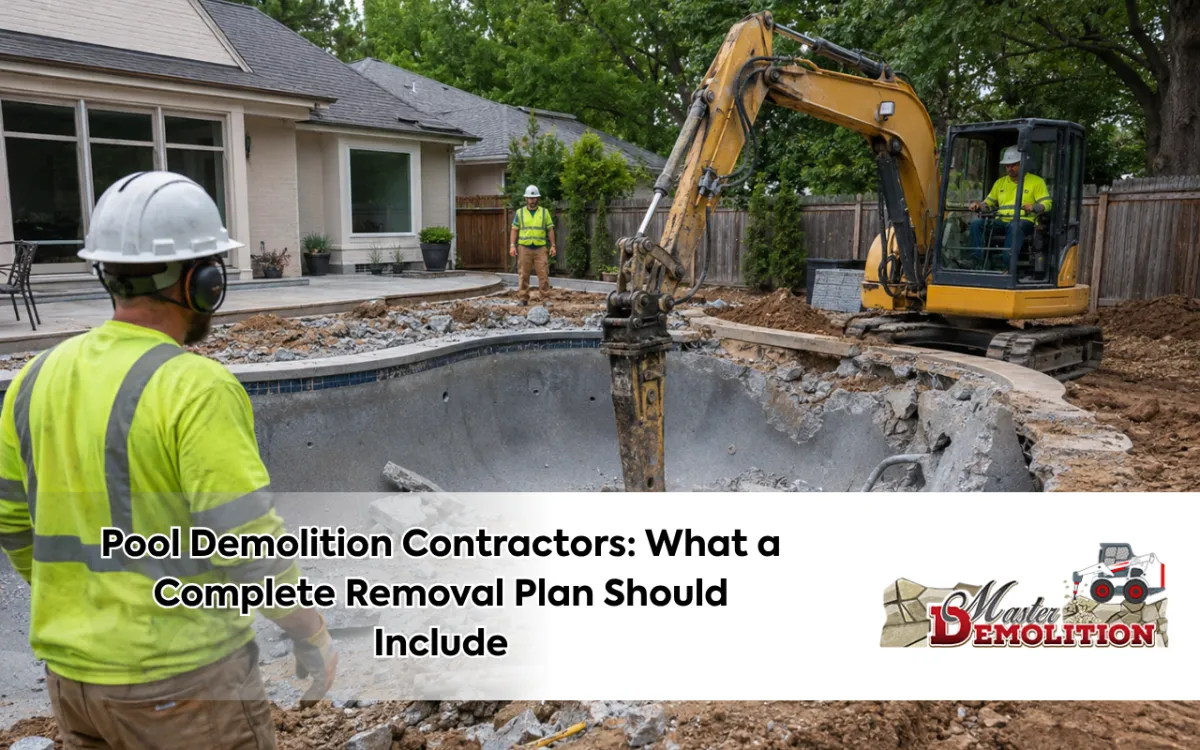
Pool Demolition Contractors: What a Complete Removal Plan Should Include
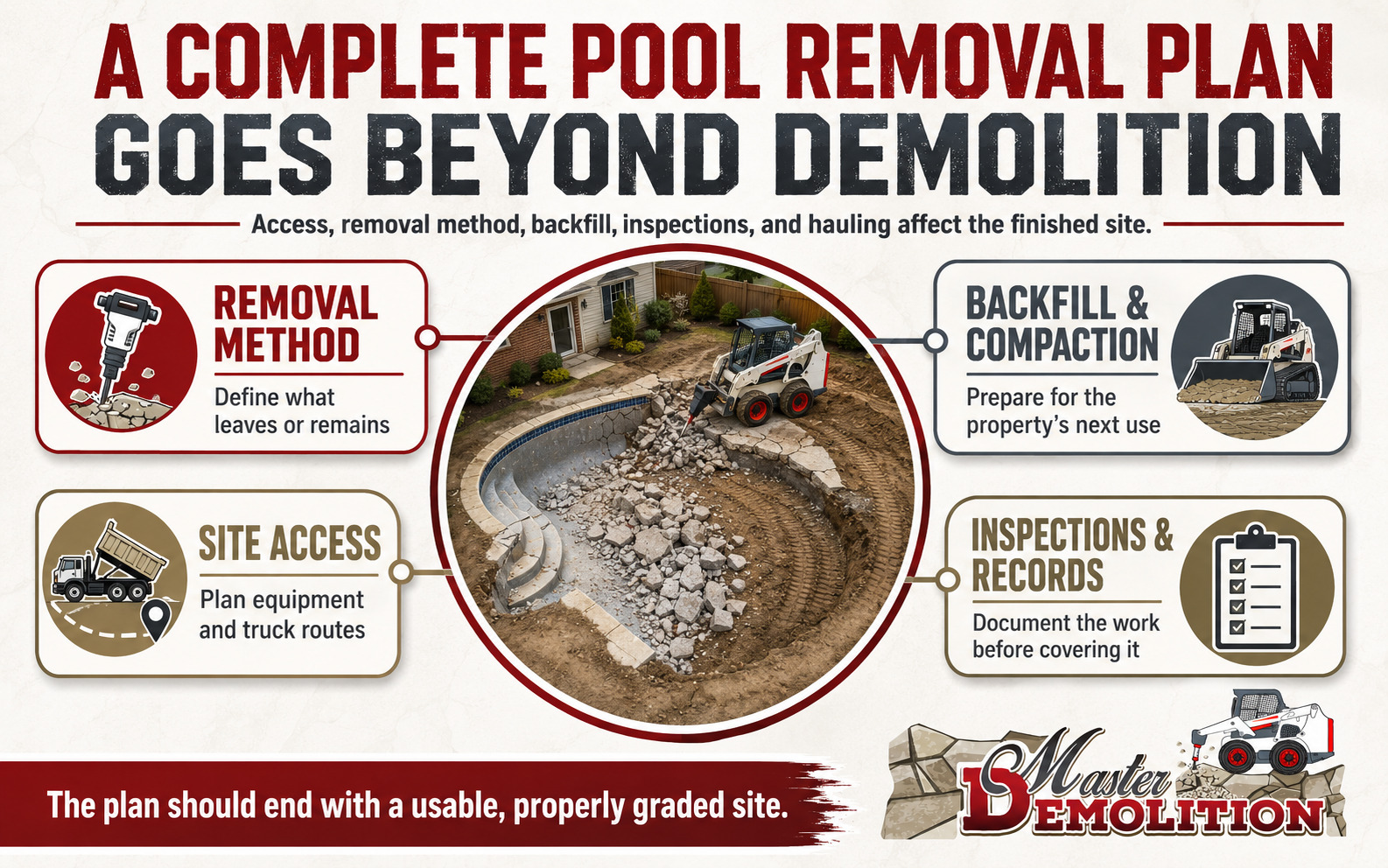
Hiring pool demolition contractors involves more than breaking concrete and filling the hole. Access, demolition method, backfill, compaction, inspections, hauling, and documentation can all affect whether the site is ready for its next use.
Request your pool estimate from our licensed and insured team with 20+ years of experience.
At Master Demolition, we guide property owners through a stress-free pool removal process built around safety, clear scope, and proper site preparation.
Decide Between Partial and Full Pool Removal
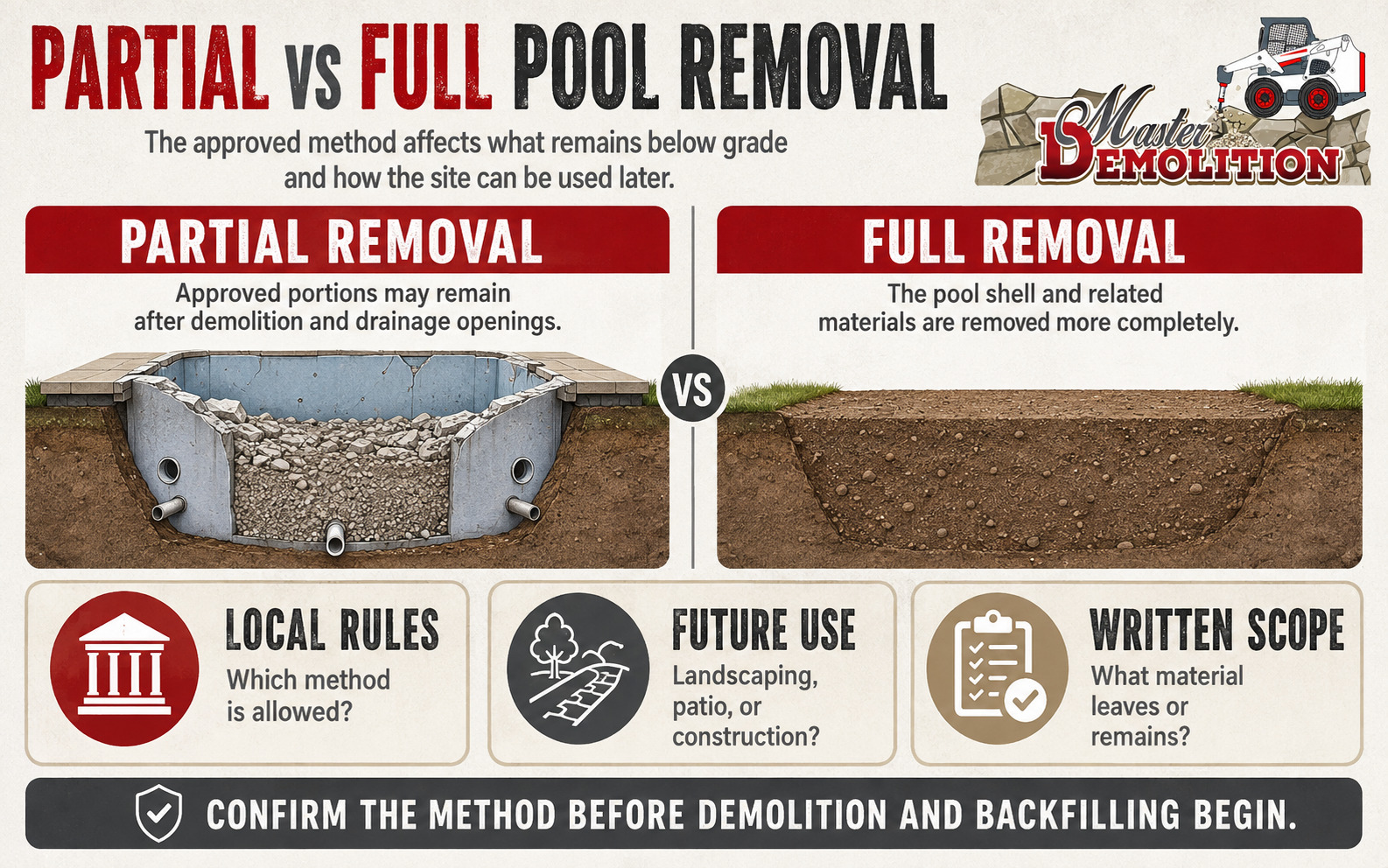
A partial removal typically leaves some pool material in place after required demolition and drainage openings are completed. A full removal generally removes the pool shell and related material more completely.
Which method is allowed or appropriate depends on local rules, future land use, engineering needs, and project goals. The estimate should explain which method is being proposed and what will remain below grade.
Confirm Access Before Equipment Arrives
Before demolition starts, the crew should confirm gate width, side-yard access, overhead lines, retaining walls, landscaping, neighboring structures, and where trucks can load debris.
Tight access may require smaller machines or more hand work, while open sites may allow larger equipment and faster hauling. Access should be reviewed early because it can affect schedule, labor, equipment, and cleanup.
Access Details to Review
Gate width and side-yard clearance
Overhead wires, tree limbs, and rooflines
Driveways, patios, fences, and retaining walls
Truck loading areas for debris hauling
Neighboring structures and property boundaries
Key Takeaway
A complete pool demolition plan should explain the removal method, site access, equipment needs, and what will remain or leave the property.
Build the Backfill Plan First
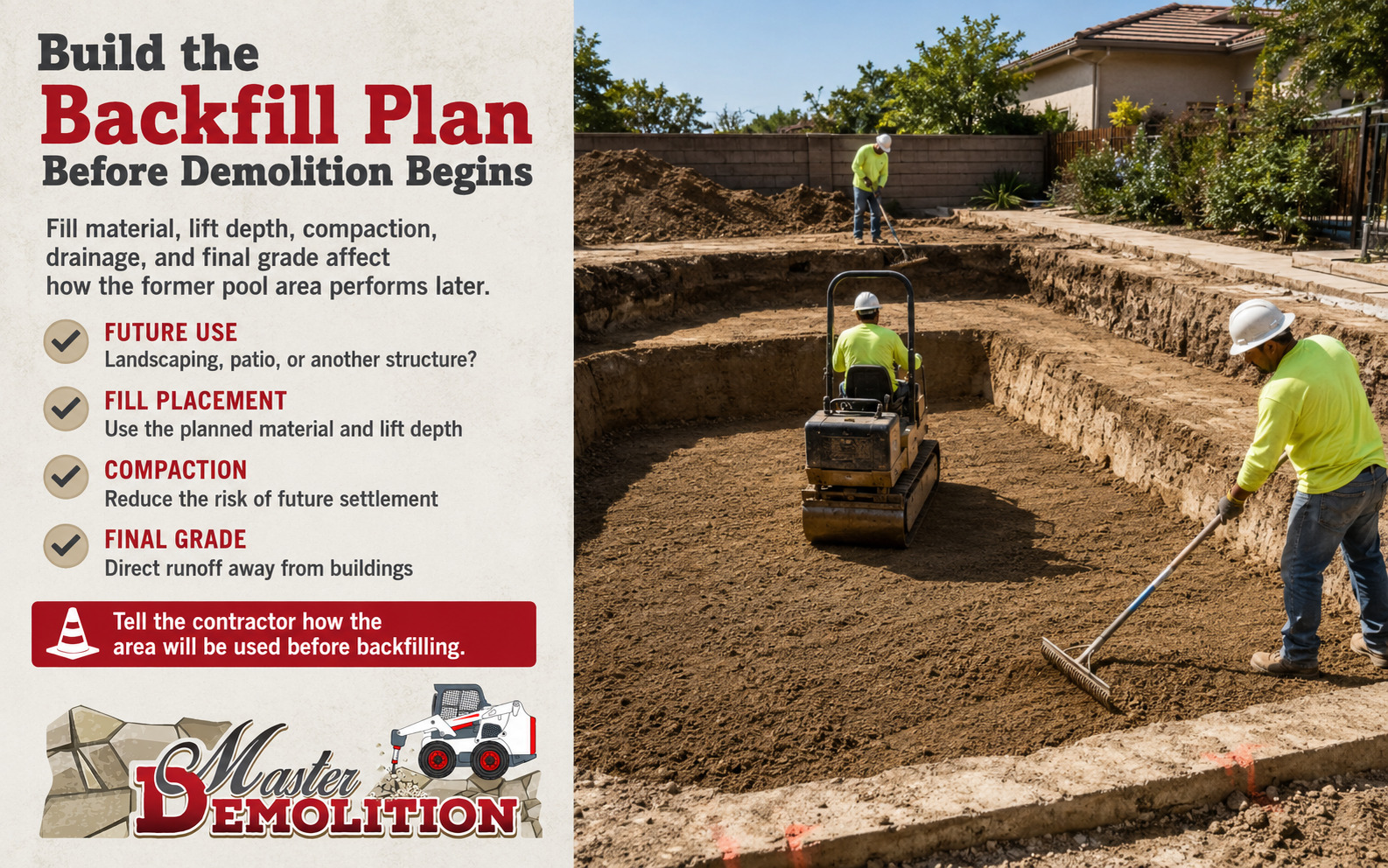
Plan your pool removal before choosing a contractor based only on demolition price. Backfill material, lift depth, compaction, drainage, and final grade all affect how the former pool area performs later.
If the future plan includes a structure, patio, landscaping, or another improvement, tell the contractor before backfilling. That information can help align the project with local requirements and the next phase of the property.
Review Pool Removal Steps Before Work Starts
A written process helps property owners understand what should happen from permit review through cleanup. It also makes it easier to track inspections, debris hauling, fill placement, and final grading.
Pool Removal Steps at a Glance
Confirm permits and utility conditions.
Drain the pool using approved methods.
Establish safe equipment access.
Demolish the shell according to the approved method.
Remove designated debris.
Place approved backfill.
Compact in planned lifts where required.
Complete inspections and final grading.
Key Takeaway
The backfill plan should be discussed before demolition begins because fill, compaction, drainage, and final grade affect future site use.
Compare What Each Removal Plan Includes
Not every estimate includes the same level of work. A clear comparison helps property owners understand whether the contractor is only removing the pool or also preparing the area for its next use.
Pool Demolition Plan Checklist
Plan Item | Why It Matters | Question to Ask |
|---|---|---|
Removal method | Partial and full removals can leave the site in different conditions. | What pool material will remain or be removed? |
Access | Equipment and hauling depend on site layout. | Can machines and trucks reach the work area safely? |
Backfill plan | Fill type and placement affect settlement and future use. | What material will be used, and how will it be placed? |
Inspections | Some work may need review before it is covered. | When should inspections happen during the project? |
Debris hauling | Concrete, rebar, plaster, piping, and deck material can add volume. | What debris is hauled away, recycled, or left under the approved method? |
Documentation | Records can help with future construction, remodeling, or sale. | What photos, permits, receipts, or inspection records should I keep? |
Understand Why Compaction Matters
Loose fill can settle after the project is finished. Compaction helps reduce future settlement and can be especially important when the area will support landscaping, hardscape, or construction.
The required compaction process may depend on local permit conditions and intended future use. If the area will support something heavier than landscaping, ask early whether additional documentation or engineering may be needed.
Key Takeaway
A strong estimate should explain removal method, access, backfill, compaction, inspections, hauling, cleanup, and documentation in plain language.
Schedule Inspections Into the Project
Some jurisdictions require inspection at specific stages before the excavation is fully filled. Covering work too early can create delays if an inspector needs to see demolition openings, debris removal, or fill placement.
A good contractor plans inspection timing instead of treating it as an afterthought. Property owners should ask who schedules inspections and what must be visible before approval.
Clarify Debris Hauling and Disposal
Concrete, rebar, plaster, piping, equipment, and deck material can create a large volume of debris. Ask how many materials are expected to leave the site and whether hauling is included.
Explore our California pool demolition services for more information about pool removal services.
Debris Hauling Questions
What material will be removed from the site?
Will concrete, rebar, plaster, and piping be hauled away?
Will deck material or pool equipment be included?
Where will trucks load debris?
Is final cleanup included in the proposal?
Key Takeaway
Inspection timing and debris hauling should be planned before the pool is covered or filled to avoid delays and unclear cleanup expectations.
Keep Documentation for Future Plans
Keep permits, inspection records, receipts, compaction documentation when applicable, and final project photos. These records can be useful during future remodeling, property sales, or construction planning.
Project Tip: Take photos of the excavation before backfill begins. They provide a visual record of what was removed and what remained.
Plan Drainage After Pool Removal
Eliminating a pool changes how water moves through the yard. Final grading should direct runoff away from buildings and avoid creating a low area that collects irrigation or rainwater.
If landscaping will replace the pool, coordinate soil depth and drainage expectations before the final fill is placed. The final grade should match the next use of the property, not only cover the former pool area.
Key Takeaway
Documentation, photos, final grading, and drainage planning can protect future remodeling, landscaping, construction, or property sale decisions.
Ask What Happens to Pool Equipment
Pumps, filters, heaters, electrical equipment, gas lines, plumbing, and decking may require separate handling. The estimate should say what is disconnected, removed, or left for another trade.
This step is especially important when equipment sits away from the pool shell or when other systems connect to the same area.
Prepare the Yard for Its Next Use
Pool demolition should end with a usable site, not just an empty hole. Final grading, drainage, fill level, and cleanup should match the next phase of the property.
Start your pool removal with Master Demolition for a free estimate within 24 hours and a safety-first process from demolition through cleanup.
Pool Demolition Contractor FAQs
What is the difference between partial and full removal?
Partial removal leaves approved portions in place, while full removal generally removes more of the pool shell and related materials.
Does pool removal require a permit?
Often, yes. Permit, inspection, and backfill requirements vary by local jurisdiction.
Why does backfill compaction matter?
Proper compaction helps reduce settlement and prepares the former pool area for its intended future use.
Do contractors haul away pool concrete?
The estimate should state exactly what material is hauled away, recycled, or allowed to remain under the approved removal method.
Do you provide pool removal estimates?
Yes. At Master Demolition, we provide free estimates within 24 hours for customer convenience.
Schedule your pool estimate and get a clear removal plan covering access, demolition, backfill, inspections, hauling, and cleanup.