
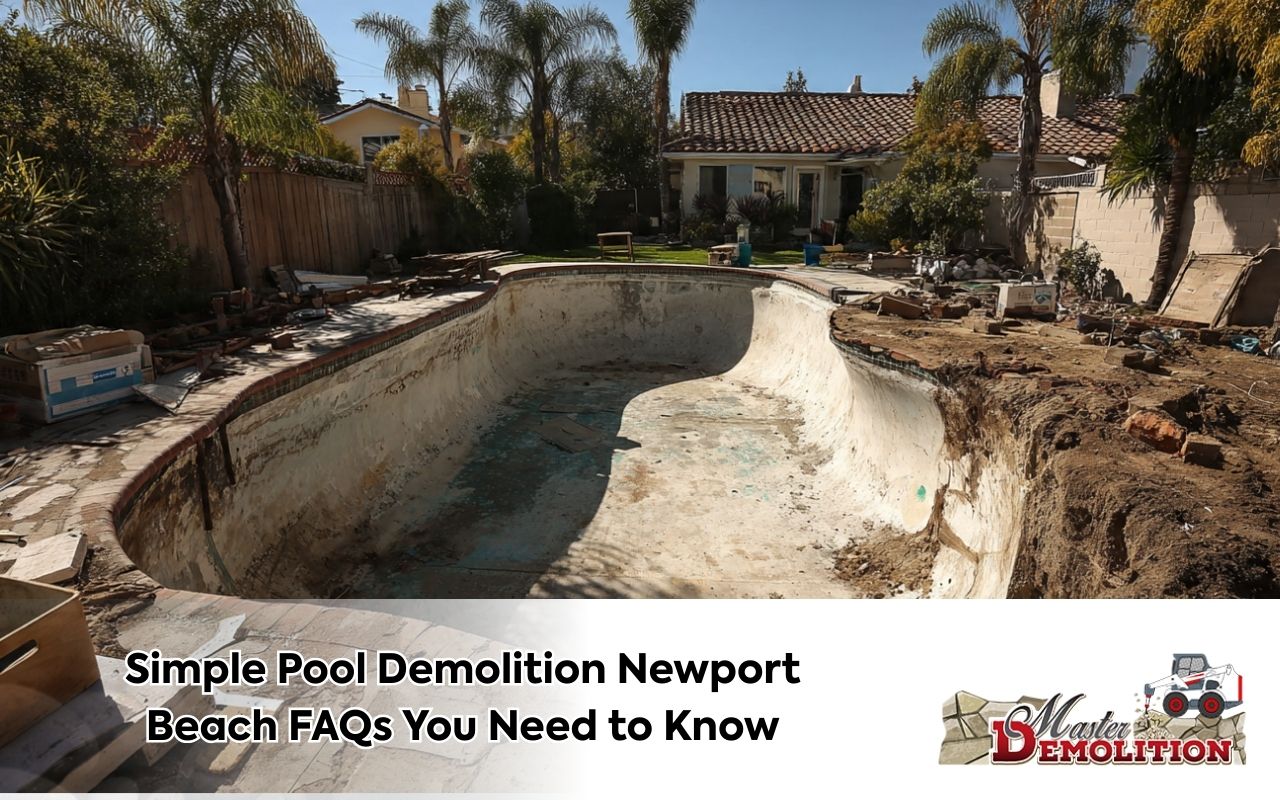
Simple Pool Demolition Newport Beach FAQs You Need to Know
Pool Demolition Newport Beach FAQs help you weigh the real work behind an old pool. You may feel tired of cleaning, chemicals, and repairs. However, demolition has steps you must plan. You also need to think about rules, site access, and cleanup. Therefore, a clear plan can reduce surprises.
Just as important, coastal conditions can change what you can do. Inspections keep the job safe and compliant. Soil compaction protects the ground after the shell is gone. As a result, you can avoid settling that harms landscaping or nearby structures. With the right approach, you can reclaim space with confidence.
Regulations and Permits for Pool Demolition in Newport Beach
Pool demolition in Newport Beach often needs permits and approvals. You must follow city codes, zoning rules, and state requirements. In some areas, you may also need coastal review. Otherwise, you could face delays, stop-work orders, or added corrective steps. So, start the paperwork early and keep records organized.
Permits and steps to expect
Confirm permit needs with the local building office.
Prepare a clear plan for demolition, hauling, and site protection.
Schedule required Inspections at key milestones.
Inspection checkpoints that matter
A pre-demo visit can uncover utilities or hidden hazards. After demolition, inspectors often focus on backfill and soil compaction quality. Consequently, passing each check helps you move forward without rework. For local guidance, review pool demolition in Newport Beach for permit-ready planning details.
Coastal considerations impacting demolition plans
Coastal considerations can shape timelines and methods near the ocean. Properties in coastal zones may face stricter rules for erosion control and stormwater handling. Therefore, plan for sediment protection so runoff stays out of drains and the shoreline. These Pool Demolition Newport Beach FAQs often begin with coastal compliance and site safeguards.
Even so, smart planning reduces risk. A coastal engineer can review tides, soil type, and erosion exposure. They can also help confirm setbacks and drainage paths. As a result, your project protects dunes, supports natural water flow, and stays aligned with local expectations.
Why soil compaction matters after pool demolition
Once the pool is removed, a large void remains. Without soil compaction, the ground can settle and crack. That can affect patios, lawns, and nearby slabs. Therefore, backfill must be placed in layers and compacted to the right density. Pool Demolition Newport Beach FAQs also highlight moisture control during compaction.
Work with a contractor who tracks lift thickness and compaction results. They should use the right equipment for your site. Moreover, they should document the process for inspections. This step supports a stable surface for future landscaping, hardscape, or additions.
Hiring the right professionals for pool demolition
Choose licensed and insured contractors with local experience. That matters even more in coastal areas. Moreover, check reviews and request photos of similar jobs. Then compare proposals that spell out permits, demo method, haul-away, and site cleanup. Pool Demolition Newport Beach FAQs often stress clarity before work begins.
Ask for proof of liability coverage and workers’ compensation.
Confirm who manages permits, scheduling, and inspections.
Request a written scope that matches your property needs.
Also, explore pool demolition across California to understand common methods and documentation. This context helps you spot gaps in bids and avoid misunderstandings.
Assessing the structural impact of removing a pool
Removing a pool can shift adjacent soil, especially near walls or driveways. Therefore, review foundations and slabs close to the pool before demolition. A structural engineer can note existing cracks or movement. Then you can plan support where needed, which helps protect property value and safety.
In some cases, reinforcement may be recommended. For example, targeted stabilization can reduce movement near retaining walls. As a result, you reduce the chance of post-demo settling issues. This also supports smoother inspections because you can show clear due diligence.
Environmental implications of pool demolition
Newport Beach sits within a sensitive coastal environment. So, waste handling and runoff control matter. Contractors should separate recyclable materials and dispose of debris correctly. Meanwhile, erosion controls help keep sediment onsite. This approach supports water quality and helps protect marine habitats during and after demolition.
If runoff risks exist, added controls may be needed. For instance, filters or berms can slow water and trap silt. Consequently, your project stays cleaner and more compliant. Good environmental planning also reduces neighbor concerns and inspection friction.
Cost factors that can change your scope
Costs vary by access, demolition method, debris volume, and site restoration needs. Coastal considerations may add planning or protection steps. Likewise, engineered reviews, inspections, and soil compaction testing can affect the scope. Therefore, ask for itemized estimates that describe each task in plain language.
Also, plan for unknowns like hidden utilities or poor soil. A detailed site walk helps reduce surprises. Moreover, documentation can prevent disputes later. By focusing on scope, not just totals, you can compare bids more fairly and avoid expensive adjustments.
Reimagining your outdoor space after pool demolition
Once the pool is gone, you can redesign the space for how you live now. For example, you might want a patio, garden, play area, or a quiet lounge. However, your plans should match drainage and soil compaction results. So, involve a landscape designer early.
Create a gathering zone with seating and shade.
Use coastal-friendly plants that need less water.
Choose materials that handle salt air and sun.
As a result, the former pool area becomes a durable, low-maintenance feature. This is especially helpful in coastal climates where materials and drainage must work together.
Safety measures during the demolition process
Safety starts with clear site controls. Fencing, signage, and marked boundaries help keep people and pets away. Workers should use protective gear and follow equipment checks. Meanwhile, a written safety plan should cover emergencies and first-aid readiness. This keeps the workflow steady and reduces risk.
Regular briefings also help. They keep the crew alert to hazards like dust, debris, and changing ground conditions. Consequently, the site stays more predictable. Strong safety habits also support smoother inspections and fewer interruptions.
Frequently Asked Questions
Do I always need coastal approvals for demolition?
Not always. However, if your property is in a coastal zone, extra review may apply. Confirm early with local agencies.
When do inspections usually happen?
Inspections often occur before demolition and after backfill. Therefore, schedule them early so compaction and cleanup stay on track.
What is the difference between full removal and partial removal?
Full removal clears the shell and removes debris. Partial removal breaks down the structure and fills the space. Your permits often dictate what is allowed.
How do I know soil compaction is done correctly?
Ask for documentation and any testing results. Also, confirm the backfill was placed in layers and compacted with proper equipment.
Who should I contact to start planning?
Start with a licensed demolition contractor who knows Newport Beach rules. Below are Pool Demolition Newport Beach FAQs to guide your first call and next steps.
Making informed decisions for your pool demolition
Pool demolition in Newport Beach involves permits, inspections, coastal considerations, and soil compaction. Therefore, planning and qualified help reduce delays and rework. Use these Pool Demolition Newport Beach FAQs to stay focused on compliance, safety, and long-term stability. For project-specific guidance, share your site details through the contact page.
Also keep environmental protection in mind. When runoff and debris are controlled, the community benefits too. As a result, your backyard can become a safer, more useful space. With clear steps and solid documentation, you can move ahead with confidence and protect your investment.