
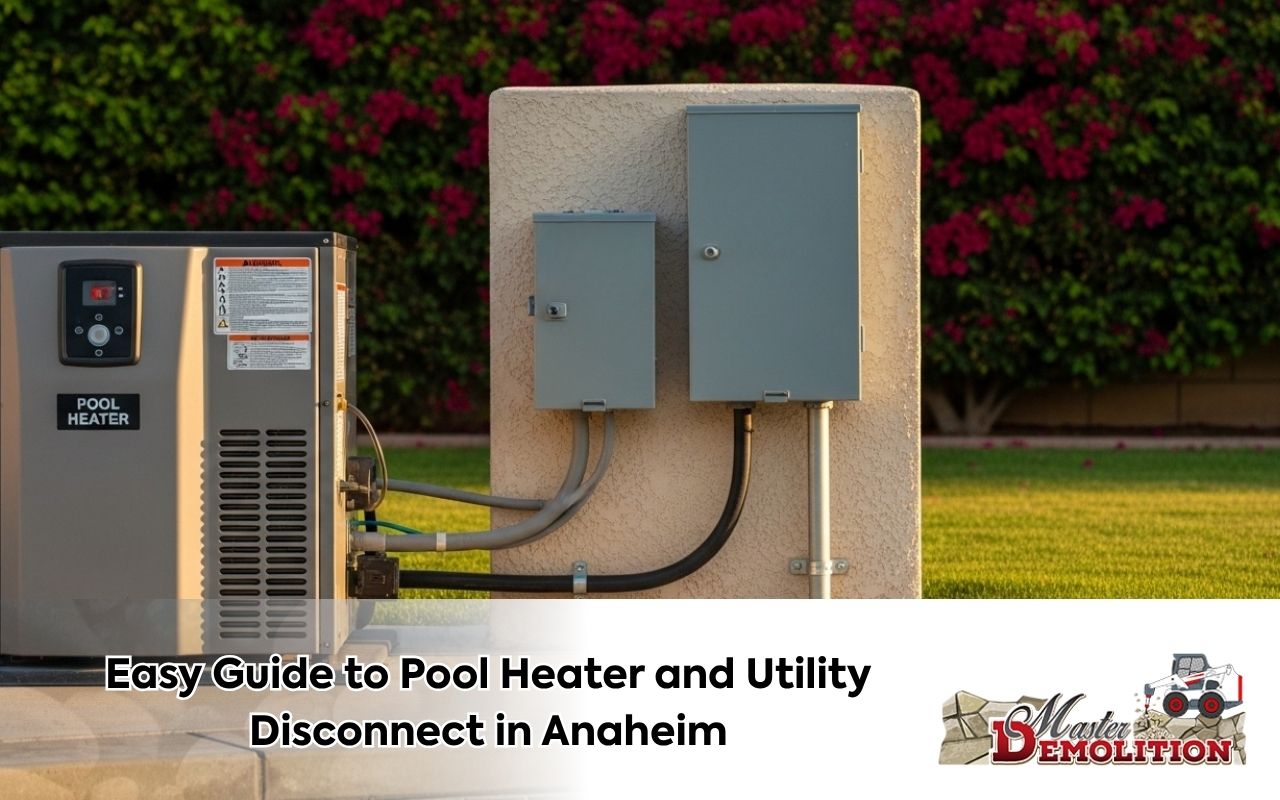
Easy Guide to Pool Heater and Utility Disconnect in Anaheim
Master Demolition can help with pool heater and utility disconnect in Anaheim for safer and easier pool projects. A good heater keeps your pool warm when days get cool.
At the same time, a safe utility disconnect protects your home and follows local rules. This guide explains gas/electric choices, capping, inspections, and safety in a simple way.
Choosing Gas and Electric Pool Heater Systems for Anaheim Homes
When people compare gas/electric heaters, they often look at speed, power use, and daily comfort. Master Demolition helps homeowners understand which choice fits the pool, the home, and the weather in Anaheim.
A gas heater warms water fast, so it works well for quick swims. An electric heat pump warms more slowly, yet it can save energy over time in mild weather.
Gas heaters warm water faster.
Electric heat pumps often use less energy.
Fuel access can change your final choice.
Before you choose, think about fuel supply, pool size, and how often you swim. In many cases, pool heater and utility disconnect in Anaheim starts with picking the right heater type first.
Understanding Anaheim Rules for Safe Utility Disconnect Installations Today
Local rules matter because pool equipment must be easy to shut off during service or danger. Master Demolition plans each pool heater and utility disconnect in Anaheim with safety and clear access in mind.
In general, the disconnect should stay close enough to the equipment for easy reach. This helps workers, inspectors, and homeowners act fast if a problem happens.
Check permit needs before work begins.
Place the disconnect in a clear spot.
Follow city and state safety rules.
It is also smart to review project details with a licensed team. You can learn more about full project support on the demolition services in California page.
Proper Capping Protects Gas and Electrical Lines Well
Proper capping is a key step when old pool equipment is removed or replaced. Master Demolition checks each line carefully because open gas or power lines can create serious safety problems.
Gas lines need approved caps and testing. Electrical lines need safe closures, sealed boxes, and weather-ready protection. Because of this, good capping lowers the risk of leaks, fire, and shock.
Cap unused gas lines the right way.
Seal electrical points from water and dirt.
Test lines before the project is finished.
Required Inspections Help Keep Pool Heater Projects Safe and Legal
Inspections are not just a final step. They help confirm that the heater, the disconnect, and the capped lines follow Anaheim rules and basic safety standards.
Master Demolition supports projects so homeowners feel ready for review. After a proper inspection, pool heater and utility disconnect in Anaheim becomes safer, cleaner, and easier to trust.
Best Placement Tips for Better Heater Safety and Easy Access
Good placement makes daily use easier and lowers risk around the pool area. A heater should sit on a firm surface, away from busy walkways and things that can burn.
The disconnect should also stay easy to reach. With a smart layout, Master Demolition helps pool heater and utility disconnect in Anaheim work better during service and emergencies.
Simple Ways to Improve Energy Use and Heater Performance
A few easy habits can help your heater work better every day. For example, a pool cover holds heat in the water, so the system does not need to run as much.
Regular cleaning also matters. Clean filters, clear vents, and yearly service can help your system last longer and keep pool heater and utility disconnect in Anaheim working in a safer way.
Professional Help Is Better Than Doing It Yourself
Some homeowners think a DIY job will save money. However, pool heater work often includes gas lines, electrical parts, permits, and inspections, so mistakes can become costly.
Master Demolition gives skilled help with planning, capping, and code-ready work. If you are also preparing for removal work, visit the pool demolition in California page for useful next steps.
Frequently Asked Questions
Is a utility disconnect required for pool heater work in Anaheim?
Yes, in many cases it is required for safe service and code compliance. It helps shut off power or gas quickly when needed.
Which is better for my pool, gas or electric?
That depends on how fast you want heat, your energy costs, and how often you use the pool. Gas is faster, while electric may save energy.
Why is capping important during heater removal?
Capping closes unused gas and electrical lines safely. This helps stop leaks, shock risks, and other damage around the pool area.
Do I need an inspection after installation or disconnect work?
Yes, inspections help confirm that the work follows local safety rules. They also help prevent future problems with the system.
Can Master Demolition help with related pool project needs?
Yes, Master Demolition helps homeowners plan safe work around pool systems, removals, and site preparation with clear steps and support.
Safe Steps for Upgrading Older Pool Heater Systems in Anaheim
Older heaters may use more energy and need more repairs over time. When that happens, a new unit can bring better comfort, quieter use, and easier care.
Before the change, plan permits, capping, and final checks. With the right process, pool heater and utility disconnect in Anaheim can move from old equipment to a safer new setup.
Building a Safer Pool Area with Smart Utility Planning
Smart planning helps homeowners enjoy a warm pool with less stress. The right heater, safe disconnect, correct capping, and required inspections all work together.
Master Demolition supports pool heater and utility disconnect in Anaheim with practical steps that protect your home, follow rules, and improve long-term safety.