
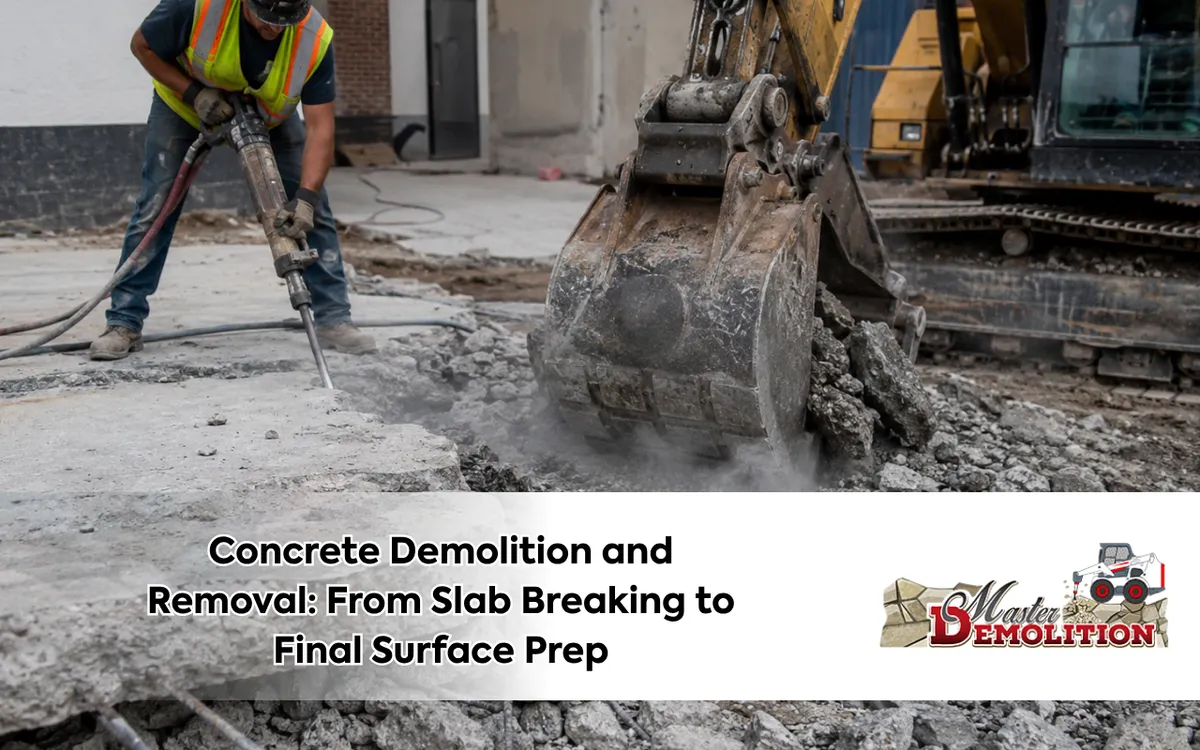
Concrete Demolition and Removal: From Slab Breaking to Final Surface Prep
Concrete demolition and removal should leave more than an empty space. Slab thickness, reinforcement, equipment access, hauling, recycling, and final surface preparation all affect whether the site is ready for its next use.
Request your concrete estimate from our licensed and insured team with 20+ years of experience.
At Master Demolition, we coordinate breaking, loading, hauling, and cleanup so property owners can move from old concrete to the next phase with less stress.
Identify What the Concrete Is Doing
A driveway, patio, pool deck, footing, foundation, and equipment pad serve different purposes and may contain different reinforcement or thicknesses.
The contractor should determine whether the concrete is structural, connected to another element, or covering utilities before demolition begins. This review helps match the removal method to the material and the site.
Concrete Details to Review
Slab thickness and visible cracking
Rebar, wire mesh, or other reinforcement
Nearby walls, drains, landscaping, or utilities
Concrete areas that must remain in place
Future use of the exposed area
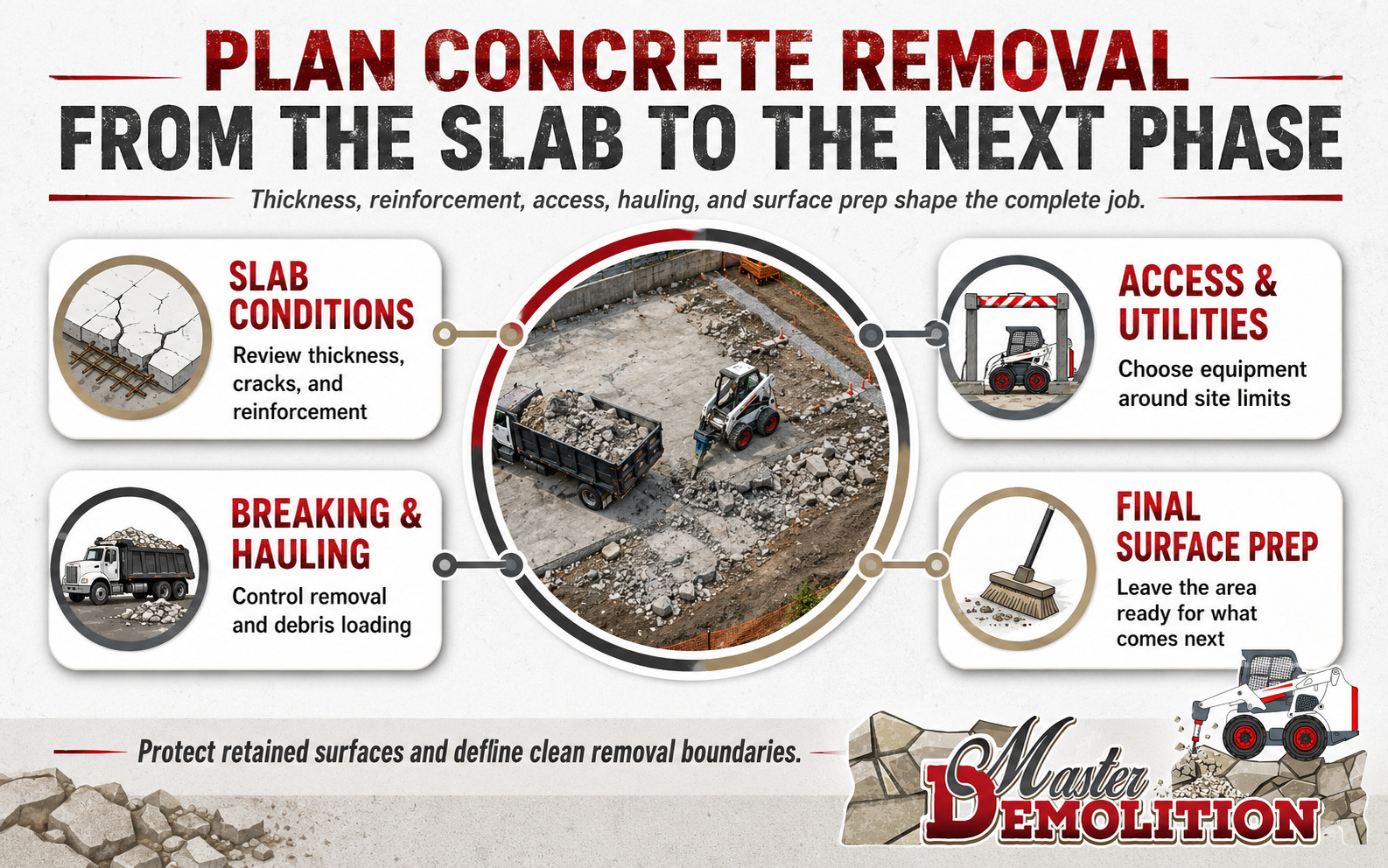
Measure Access Before Choosing Equipment
Equipment must fit through gates, side yards, driveways, or commercial access points without damaging retained surfaces. Tight access may require compact machines or more hand work.
Truck access also matters because concrete debris is heavy and must leave the site efficiently. A good access plan supports safe equipment movement, concrete hauling, and cleanup.
Key Takeaway
A strong concrete removal plan starts with slab purpose, reinforcement, access, utilities, surrounding surfaces, and future site use.
Plan Slab Removal Around What Stays
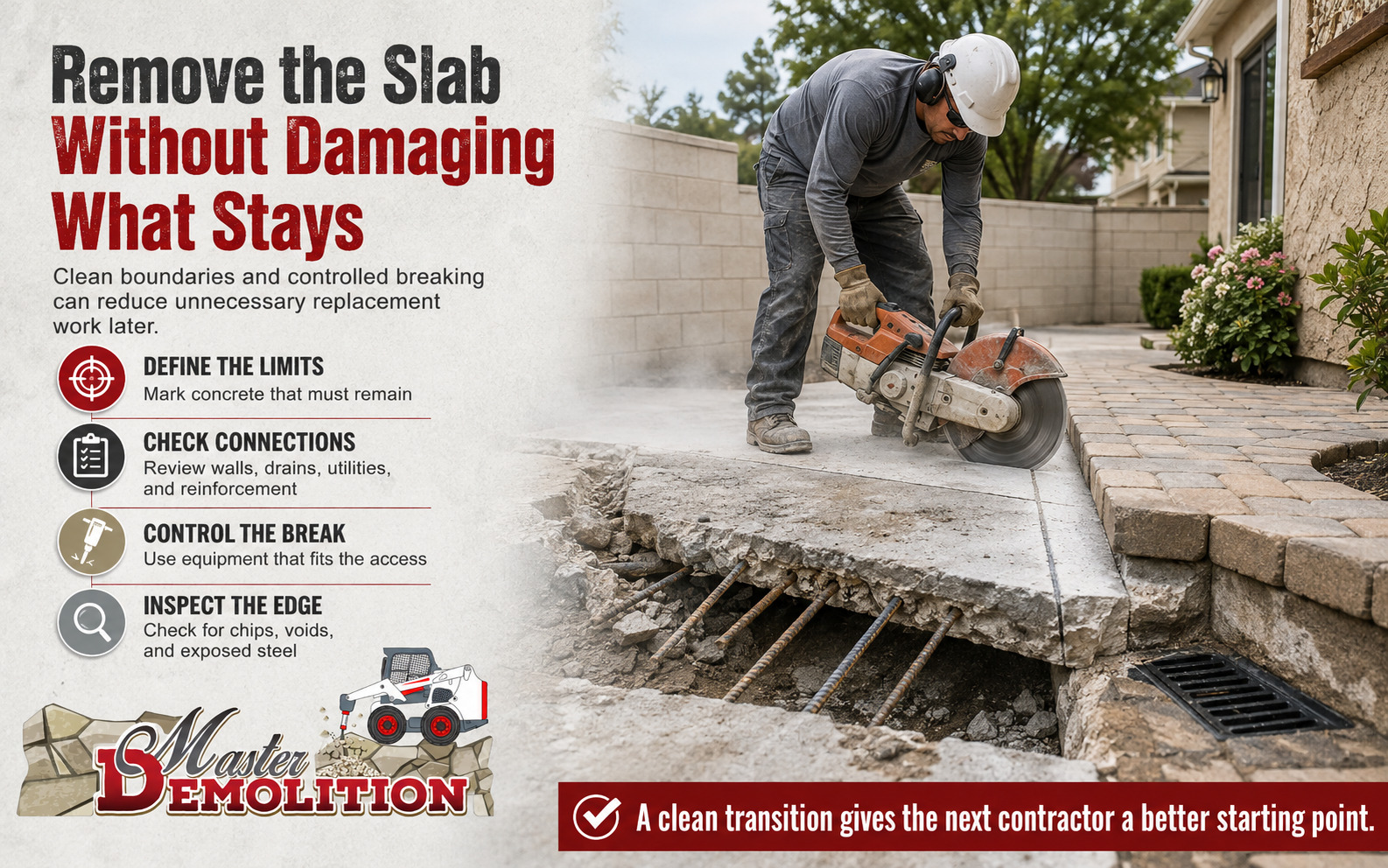
Plan your concrete removal before cutting or breaking begins if adjacent asphalt, pavers, walls, foundations, drains, or landscaping must remain.
Saw-cut boundaries and controlled breaking can help create cleaner limits. A precise removal line can reduce unnecessary replacement work later.
Review the Concrete Removal Workflow
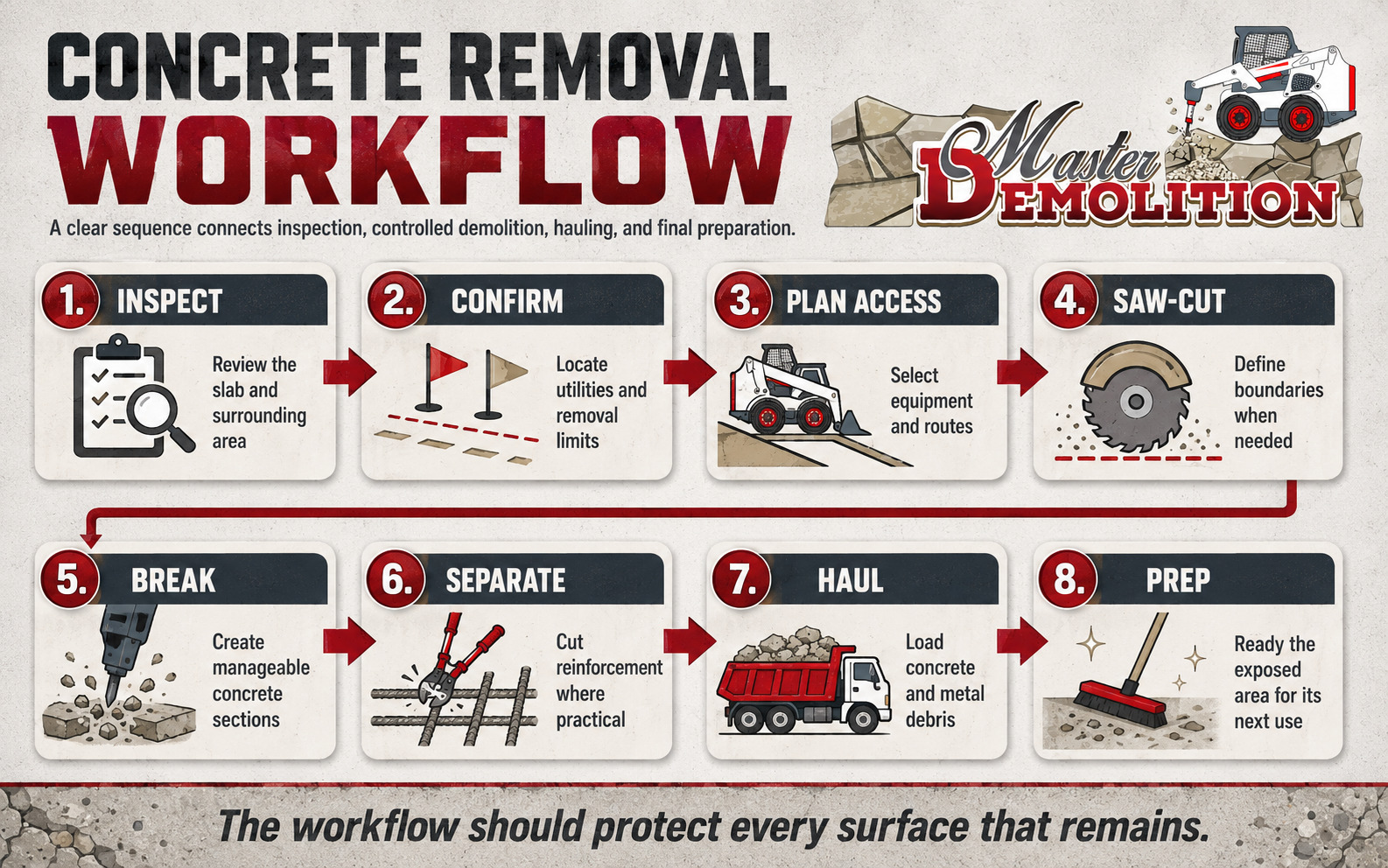
A clear workflow helps property owners understand how slab removal moves from inspection to final surface prep. It also helps confirm where access, hauling, and recycling fit into the project.
Concrete Removal Workflow
Inspect the slab and surrounding area.
Confirm utilities and removal limits.
Select equipment and access routes.
Saw-cut boundaries when needed.
Break concrete into manageable sections.
Separate reinforcement where practical.
Load and haul debris.
Prepare the exposed surface for the next phase.
Key Takeaway
Slab removal should protect the areas that stay, define clean edges, and include a plan for debris loading and final surface prep.
Account for Rebar and Reinforcement
Reinforced concrete may stay connected even after it cracks. Rebar or wire mesh can require cutting before sections are separated and loaded.
This adds labor and can change equipment selection and hauling time. If reinforcement is likely, it should be discussed before the estimate is finalized.
Price Concrete Hauling Clearly
Because concrete is dense, disposal or recycling weight can become a major part of project cost. Ask whether hauling, tipping, and cleanup are included in the quote.
California supports reuse and recycling of construction and demolition materials, and local diversion requirements may apply to qualifying projects.
Concrete Hauling Questions
Who loads the broken concrete?
Is concrete hauling included in the estimate?
Will rebar or metal be separated?
Where will concrete debris be taken?
Does the quote include cleanup after hauling?
Key Takeaway
Rebar, slab thickness, concrete hauling, tipping fees, recycling needs, and cleanup should be clear before demolition begins.
Ask About Concrete Recycling
Clean concrete can often be processed into recycled aggregate rather than sent directly to landfill. Steel reinforcement may also be separated for recycling.
Project Tip: Ask how mixed materials will be handled. Concrete contaminated with soil, wood, or other debris may follow a different recycling path.
Plan Surface Prep Around the Next Project
Removing a patio for landscaping may need different final grading from removing a slab for replacement concrete. Tell the contractor what will be installed next.
That information can affect removal depth, edge conditions, excavation, cleanup, and final surface prep. The goal is to leave the area ready for the next planned use.
Surface Prep Examples
Landscape areas may need rough grading and soil planning.
Replacement slabs may need cleaner edges and base review.
Driveway work may require access and transition planning.
Foundation-related work may need deeper removal or excavation.
Utility work may require trench access or extra clearance.
Key Takeaway
Recycling, cleanup, and surface prep should match the next project, whether it is landscaping, new concrete, utility work, or construction.
See Real Demolition Work Before Hiring
Project videos can help property owners understand equipment scale, debris handling, and site workflow before work begins.
Visit our demolition project videos to see examples of demolition work.
Check Edges Before New Work Starts
After removal, inspect the boundary where old concrete meets material that remains. Chipped edges, exposed reinforcement, loose base, or unexpected voids may need attention before a replacement slab or finish is installed.
A clean transition gives the next contractor a better starting point and can reduce extra preparation later.
Key Takeaway
Before new work begins, check edges, remaining surfaces, exposed reinforcement, base material, and final grade.
Remove More Than Slabs When Needed
Concrete removal may involve walls, curbs, foundations, footings, pool decks, driveways, walkways, and other hardscape.
Explore our California concrete demolition services for available service options.
Finish With a Clean Transition
Good concrete demolition and removal should protect surrounding areas, remove broken material, and leave the site prepared for what happens next.
Start your concrete removal with Master Demolition for a free estimate within 24 hours, comprehensive service, and a safety-first process.
Concrete Demolition and Removal FAQs
How is a concrete slab removed?
Crews typically inspect, cut boundaries when needed, break the slab, separate reinforcement, load debris, and prepare the exposed area.
Can reinforced concrete be removed?
Yes. Rebar or wire mesh adds steps because reinforcement must be cut or separated during demolition.
Is demolished concrete recyclable?
Often, yes. Clean concrete can frequently be processed as recycled aggregate, while metal reinforcement may be recycled separately.
Can you remove only part of a slab?
Yes, when the removal boundary can be safely defined and the remaining concrete is suitable to stay.
Do you provide concrete removal estimates?
Yes. At Master Demolition, we provide free estimates within 24 hours for customer convenience.
Schedule your concrete removal and get a clear plan for slab breaking, hauling, recycling, access, and final surface preparation.