
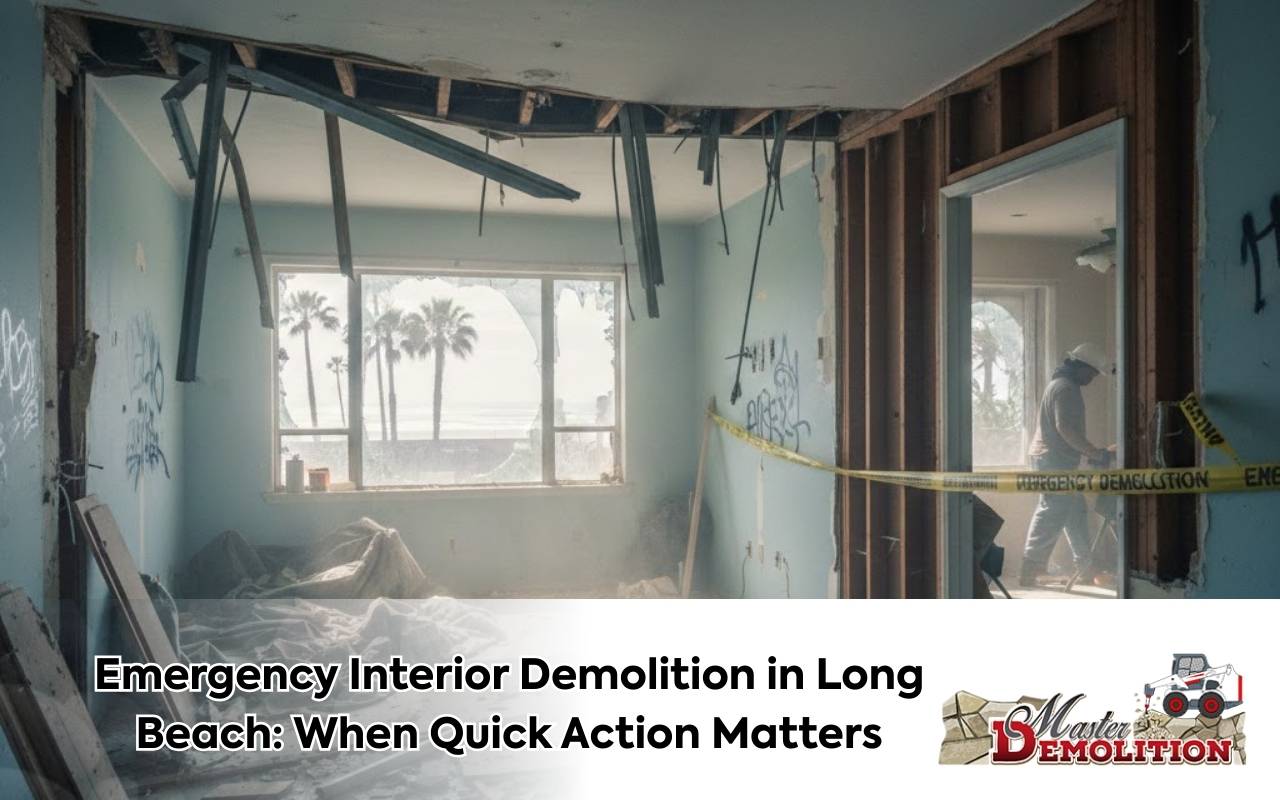
Emergency Interior Demolition in Long Beach: When Quick Action Matters
Emergency Interior Demolition in Long Beach is vital when a crisis hits your property. Water damage from a burst pipe or heavy storm can quickly harm walls, floors, and supports. As moisture moves into these areas, it weakens the basic frame of your home or business and puts everyone at risk.
In these tense moments, fast removal of damaged materials is essential. This emergency work limits further destruction and prepares the space for safe repairs. At the same time, clear documentation and a simple planning guide every step. This blog explains how quick interior demolition protects your property and makes the road to rebuilding easier and more organized.
Understanding the Importance of Emergency Interior Demolition in Long Beach
Acting fast after serious property damage protects both people and buildings. Emergency Interior Demolition in Long Beach is more than breaking down walls. It means carefully removing unsafe materials so you can stop new problems from starting and protect the structure that remains.
Water damage can soak beams, drywall, and insulation. If damp sections stay in place, they may grow mold and weaken supports. By removing them quickly, you protect structural safety and create a clear view of what still works. Detailed documentation during each stage also supports insurance claims and shows that local rules were followed from the start.
Common Causes of Needing Emergency Interior Demolition
Many unexpected issues can lead to urgent demolition. One of the most common is water damage. Floods, storm runoff, or leaking pipes can spill water into walls and floors. Over time, this trapped moisture weakens drywall and wood studs until sections bend, sag, or even fail.
Heavy storms that push water into basements and lower floors
Burst or leaking pipes inside walls and ceilings
Hidden moisture that causes mold growth and soft surfaces
Termite activity or long-term neglect that weakens the supports
Fire damage that leaves beams and steel overheated or brittle
Structural safety issues also trigger urgent work. Shifting foundations or severe infestations can crack walls and ceilings. Without quick action, the risk of collapse increases. Fire damage may leave areas that look solid but are no longer safe. Older buildings can also hide unsafe wiring or plumbing. In these cases, fast removal allows experts to repair systems before they cause more harm.
Safety Precautions and Regulations in Emergency Demolition
Before any demolition starts, safety rules must guide every decision. Workers wear hard hats, gloves, eye protection, and dust masks to reduce risk. Clear work zones keep bystanders away from danger. Warning signs, barriers, and bright lighting show where people should not enter and help keep the site secure.
Use proper personal protective equipment at all times
Block off work areas with tape, cones, or temporary fencing
Post visible signs that explain current hazards
Plan safe entry and exit paths for workers and inspectors
Regulations also explain how to handle hazardous materials. Older structures may contain lead paint or asbestos in walls and ceilings. Trained crews must test for these risks and remove them under state and local rules. Careful documentation of this work supports environmental standards and prevents fines or delays.
Steps Involved in Swift Emergency Interior Demolition
When time matters, a clear plan keeps the process safe and efficient. First comes an on-site assessment. Professionals walk through each room to locate weak spots and safety hazards. This rapid survey guides the demolition plan and supports accurate documentation for insurance and permits.
Inspect and document damage in every affected area
Shut off utilities in unsafe zones, if needed
Remove wet, burned, or broken materials in stages
Sort debris and separate items for salvage or recycling
Clean and stabilize the space for future repairs
During removal, crews usually start at ceilings and upper walls and then move downward. This method reduces the chance of surprise collapses. After the work is done, the team cleans up dust and loose debris. Each major step is recorded so insurance reviewers and inspectors can see that all unsafe materials were removed correctly.
Tools and Equipment Used in Emergency Interior Demolition
Effective emergency work depends on the right tools. Crews often use sledgehammers and pry bars to open walls and remove damaged studs. For thicker beams and metal framing, they turn to heavy-duty saws. When there is standing water, wet/dry vacuums help reduce water damage and give mold less chance to spread.
Power tools also speed up the process. Reciprocating saws and handheld grinders cut through wood, metal, and other materials, but they require careful handling. Workers wear gloves and goggles to shield themselves from flying fragments. Ladders and scaffolding offer stable platforms for high ceilings, while debris carts and covered dumpsters keep walkways clear and safer for everyone.
Salvage and Cleanup After Emergency Interior Demolition
Once demolition ends, crews review the debris for items that can be saved. Solid wood planks, steel beams, and some fixtures may still be in good shape. Reusing these materials cuts waste and can lower repair costs. Teams also separate recyclable items, such as metal and clean drywall, in line with local recycling rules.
After sorting, thorough cleanup begins. Pressure washing or steam cleaning removes dust and any harmful residue from surfaces. Air scrubbers and fans improve indoor air quality and help dry damp areas. When the space is clean and dry, it is ready for mold treatments, new framing, and other key steps toward full restoration.
Hiring Professionals for Emergency Interior Demolition in Long Beach
Choosing the right contractor greatly affects the outcome. Look for licensed and insured teams with proven experience handling water damage, structural safety concerns, and detailed documentation. Reviews and photos from other Long Beach property owners can show how well a company manages urgent situations.
Ideally, your contractor should offer complete services, from early inspections to final cleanup. Many property owners review available demolition services to compare options. Make sure any team you choose explains its process clearly, provides written estimates, and keeps careful records that support future insurance claims.
Insurance Coverage for Emergency Interior Demolition
Understanding your insurance policy can reduce stress during a crisis. Many property policies cover sudden events like burst pipes or intense storms. However, coverage limits and deductibles vary. Some plans pay for both emergency demolition and repairs, while others focus mainly on rebuilding after the damage is under control.
Good documentation is essential for a smooth claim. Take photos of water damage, cracked structures, and any visible mold. Ask your contractor for written reports that list removed materials and explain the work done. These detailed records support your claim and help your adjuster reach fair decisions more quickly.
Post-Demolition Assessment and Planning
After debris is cleared, experts examine the site again. Structural engineers or skilled contractors check beams, joists, and foundations for hidden issues. Their findings help decide what must be reinforced or replaced so that the building can better resist future storms, leaks, and other threats.
With the assessment complete, rebuilding plans take shape. Contractors may suggest moisture-resistant materials and improved layouts for better safety. Written plans support permit approvals and make scheduling easier. Strong documentation also helps you track progress and keep work on budget, from the first repair step to the final finish.
Frequently Asked Questions
How do I know I need emergency interior demolition?
You may need this service if you see severe water damage, sagging ceilings, cracked walls, or signs of mold or rot. Any sudden change that affects structural safety should be checked by a professional.
Can I stay in my property during emergency interior demolition?
Often, parts of the property must be closed off for safety. In more serious cases, you may need to leave until the most dangerous work is complete and the area is secure again.
How quickly should I act after water damage?
Act as soon as you notice water damage. Fast action limits mold growth and structural problems. The longer moisture stays trapped in walls or floors, the higher the risk of more serious issues.
What kind of documentation should I keep?
Keep photos, videos, contractor reports, and any communication with your insurance company. These records help prove the extent of the damage and show that you followed proper steps during cleanup and repairs.
Who should I contact first in an emergency situation?
First, make sure everyone is safe and utilities are shut off if needed. Then contact both your insurance company and a trusted demolition contractor. You can also contact our team to discuss the next steps.
Rebuilding After Emergency Interior Demolition in Long Beach
Swift Emergency Interior Demolition in Long Beach protects your property and everyone inside it. By dealing with water damage and weakened structures right away, you create a safe base for organized repairs. Strong documentation supports insurance claims and proves that each step followed local codes and safety rules.
With the right professionals, tools, and plan, your project can move from crisis to recovery. Focusing on structural safety, smart material choices, and clear records helps you rebuild with confidence. Over time, these careful decisions lead to a stronger, safer building that is better prepared for future challenges.